The cashew nut grows below a swollen stalk, the cashew apple. It spoils quickly after falling and is usually discarded, yet it is rich in vitamin C and antioxidants and yields juice, pectin, syrups, jams, vinegar and alcoholic drinks.
Shells contain cashew nut shell liquid (CNSL), a resin used in industrial applications including aircraft braking fluids, and dried shells can fuel energy. There is currently no waste-management policy in the sector, so shell heaps and CNSL pits create hazards, methane (CH₄) emissions and soil and water pollution.
| By-product | Potential application |
|---|---|
| Cashew shells | Industrial fuel and biochar |
| CNSL | Resins, coatings, chemicals |
| Cashew apples | Juice, jam, syrup, other foods |
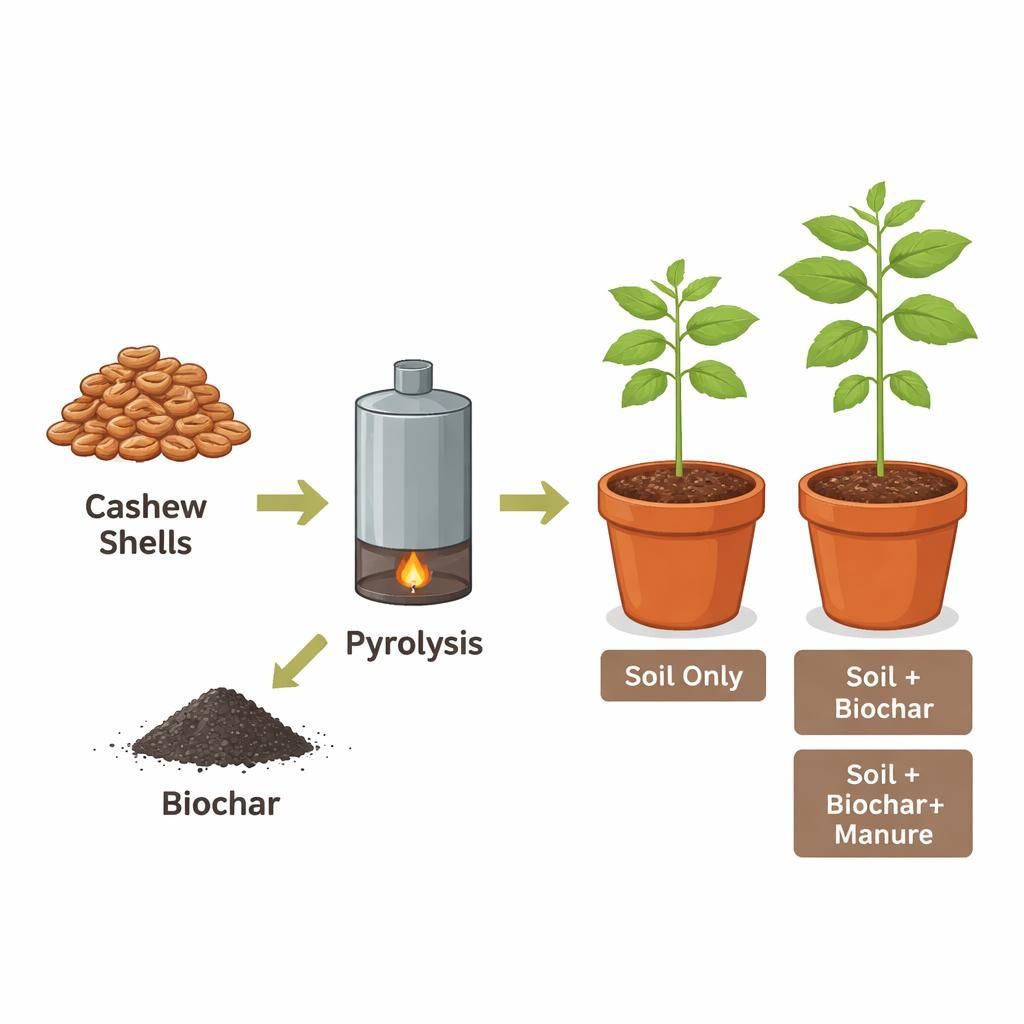
| Biochar | Soil amendment, potential carbon storage |
| Processing residues | Renewable energy, circular products |
Studies proposed: circular-economy applicability starting with the cashew apple; shell waste-to-energy through pyrolysis and carbonisation; and biochar for cashew farms.